


The second World Humanoid Robot Games, convened in Beijing last Saturday, have come to a close. In a triumph for Chinese state media, clips of human-shaped robots running, jumping, kickboxing, and marching in army-like unison filled global social media feeds. In one widely shared moment, a robot sprinter beat Usain Bolt’s record in the 100 meter dash, only to slam into a wall at full speed and get carried off the field on a stretcher. This wasn’t a malfunction: the creators of these running machines only designed them to run, not to slow down or stop. It’s hard not to see this as a metaphor for big tech in general.
Notably absent from the macho mecha-gladiatorial festivities, or at least the footage of them, were robots from Japan. This shouldn’t entirely surprise. In a 2025 interview, Murali Gopalakrishnam, who heads product management for “intelligent machines” at the tech giant NVIDIA, told the Nikkei Shimbun newspaper that “Japan is no longer the land of robotics.”
That must have hurt. Everyone knows Japan loves robots. In the Sixties, anime arrived with Astro Boy. A slew of robot shows followed, leading to a revolution in the way kids play. By the Eighties, if you’d been born pretty much anywhere in the advanced world, you spent your childhood surrounded by robots from Japan: Shogun Warriors and Transformers and Go-Bots and Voltrons and Megazords, just to name a very few. As I wrote about recently:
Toy Story

One of the hazards of my hobby-turned-vocation of tracking down the creators of Japanese fantasies is that many of them are elderly, and we soon have to say farewell. It’s a jarring thing, finally meeting someone who had an indirect hand in making you
But Japanese robots weren’t only dominating playrooms: they were causing commotions in boardrooms, too. As I wrote in an essay about Japan’s affinity for AI, global captains of industry were uniformly convinced that Japan’s manufacturing robots were poised to take over the world.
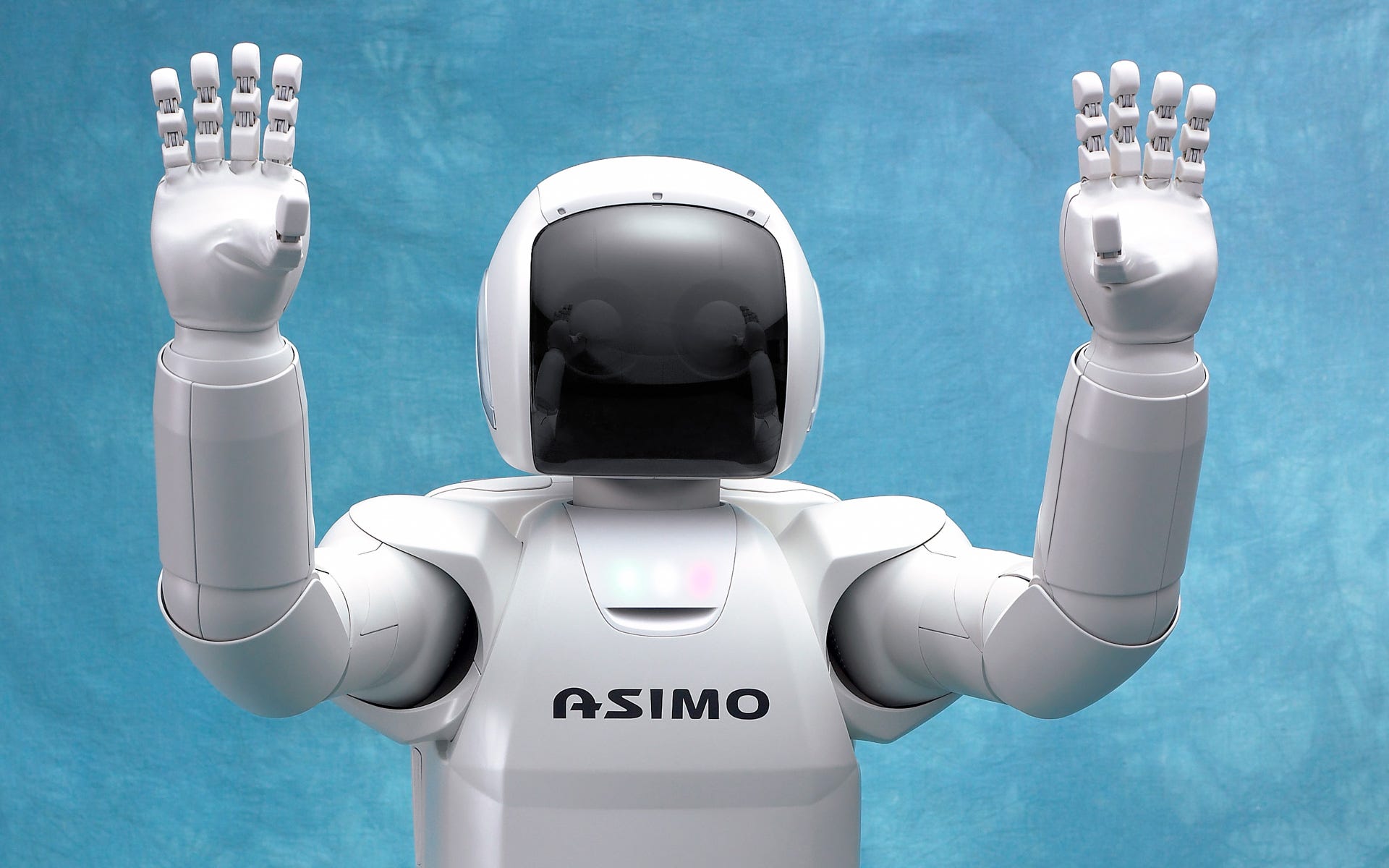
In the 1990s, Japanese engineers began blurring the lines between play and industry by creating humanoid robot performers. Honda blazed the trail with a series of prototypes that culminated in Asimo, which debuted in 2000. Diminutive but eerily human-like in its movements, the bipedal, seemingly space-suited Asimo cemented Japan’s image as the Robot Kingdom (as a (great!) book of the day called the country.)
More recently, though, Japan seems to have lost its robot mojo. Robots are a rarity on television and movie screens, replaced by fantasies centering on (bo-rrring!) human drama. Honda last updated Asimo in 2011, ceased making new ones in 2018, and retired it altogether in 2022. Robots don’t seem to be much of a presence in society at all, save for a few sad-looking Pepper droids, orphaned by the bankruptcy of their maker. What happened?
Superficially, it seems another case of the Galapagos effect, the disparaging term for Japan ceding its ambitions to foreign competitors. From smartphones to social media, algorithms to AI, Japan seems to have missed out on nearly every tech trend of the 21st century. Humanoid robots would appear another sad example.
Or are they? It’s obvious Japan has no lack of vision when it comes to imagining humanoid robots, nor any lack of technical expertise in building them, and it certainly seems like Japanese citizens would be primed to embrace them, were they available. Now, money is another question. There’s no way Japanese startups can attract the kind of funding that they once could have in Japan’s Eighties “bubble economy,” or Western ones can in the current AI bubble. And would there be many takers for the products, given 60% of Japanese households are struggling to make ends meet?
But let’s put economics aside for a moment and focus on the technical side of things. Japan is famously bad at (non-game) software and great at hardware, and robots are literal personifications of hardware. It turns out I’m not the only one curious about why Japan seems to be sitting out of the robot races.
In a 2025 blog post, the robotics engineer Takashi Ogura opined that it wasn’t due to lack of ambition, but rather lived experience. “Major players like Toyota, Honda, Kawasaki Heavy Industries, and even Google were unable to succeed in the humanoid robot business,” he writes, “and that difficulty of success is deeply ingrained in us robot engineers, almost at a genetic level.” In other words, the Japanese firms “speed-ran” the robot business model. Decades ahead of China and the West, they discovered no real use cases for them beyond corporate PR or stage shows, and quietly exited the market.
Ah, but what about the wildcard of AI? The next frontier, according to many leaders in the space, is “physical AI,” which is shorthand for giving AI models the ability to interact with the physical world. Humanoid robots are alluring receptacles for this technology. Japan not being a leader in AI would mean they’d fail to connect the dots.
But there are hints that AI may not prove the secret sauce that its proponents believe it to be. In a TBS Cross Dig interview earlier this year, Tetsuya Ogata, a Waseda professor who’s spent his career in neural networks and robotics, pointed out is that Japan still is filled with robots: they’re just in factories and other places where average folks don’t have a chance to see them. (Like the moon, for instance.)
In his eyes, Asimo represented a “super hyper technology.” This is a phrase I want to start working into my daily vocabulary, but he meant it in terms of the product of decades of technical know-how and craftsmanship brought to bear by researchers, engineers, and technicians. “The amazing thing is that they managed to make Asimo without AI,” he continued. “It was made by humans. It was programmed by humans. It was an extremely specialized application. And nobody was able to copy that,” until AI came along.
In other words, Honda (and Toyota, and of course the academics at Waseda) brute-forced the humanoid robot “problem” through sheer willpower (and presumably a lot of overtime, after-hours boozing, and cigarettes – this was the Heisei era, after all.) Their combined knowledge and blood alcohol/nicotine levels crystallized in an exquisite, one-of-a-kind machine. And because nobody could make Asimos except the special forces team of techno-craftspeople who spent a decade refining them, there was nobody to pass the baton to, in terms of further development or commercialization.
Ogata’s conversation was punctuated with footage of the robot he’s currently working on at Waseda, which isn’t particularly sexy by Silicon Valley or Beijing standards. It’s just a stick-figure “semi-humanoid,” a torso atop a wheeled base, which is seen carefully taking laundry out of a dryer and folding it.
There’s something deeply amusing about watching a Japanese robot meticulously fold tiny pairs of pants. Here’s another example of Japan’s Galapagos-ization, one wants to snark. Yet it also feels comforting. I don’t know how I’d use a kung-fu droid or robot sprinter, but who doesn’t want someone to do their laundry for them? And more to the point you know, just know, that all the stuff coming out of American and Chinese startups is going straight onto a battlefield as soon as (in)humanly possible.
Robots are a form of soft power. But soft power depends on a sense of safety and predictability, so any gains are sharply undercut by the scary footage of out-of-control androids caroming off walls, crashing into one another, or catching fire. Staging these Games was a bold move for China. But it also puts Japan’s abandonment of humanoid robots in a new perspective. Humanoid robots don’t feel safe. They aren’t safe. Would you trust any of these things in your homes? Around your children? When one or another "tech visionary” claims that home robot companions are just around the corner, it sounds a lot like some of you are going to get hurt, but it’s a sacrifice I’m willing to make.
Japanese companies weren’t. This is why their robots are now folding laundry rather than fighting cage matches. Honda and Toyota and the rest never managed to bridge the gulf between the staged performance and the home, and made the decision to focus on less flashy applications. Japan has never been great at the whole “break things and ask forgiveness later” thing, for better or for worse.
As I watched the World Humanoid Robot Games, it dawned on me that main function of a modern humanoid robot isn’t helping around the home, or rescuing people from danger, or fighting on a battlefield. It’s the same as it ever was: public relations for the companies making them. For the moment, the purpose of humanoid robot is simple and singular: producing YouTube videos.
Japanese companies and engineers figured this out early on, and decided to focus their attention on other things. This isn’t a lack of vision or boldness, but calculation and common sense. Robots have always bewitched us because they’re such evocative symbols of technology. This most recent crop of foreign robots also symbolizes something I’ve been saying: In a world driven mad by tech disruption, Japan’s cautiousness may well represent a quiet superpower.
Super Galapagos

Galapagos is, of course, an archipelago off the coast of Ecuador, named for the giant turtles that are its most famous residents. It is famed for its remoteness and for how the wildlife evolved to match the peculiarities of that local environment. But it has another meaning in Japan. Engineer and “open source guy” Shuji Sado jokingly started calling Ja…
I guess this means I’ll never have Robocon’s friend Robopu make me whisky in his kettle head. All I’ll ever have is the whimsical idea of him doing so!
The LOVOT companion robots and the little robots they have at DAWN Avatar Robot Cafe in Tokyo are why I love Japan. While the rest of the world is making robots that can murder you in your sleep, Japan is making robots you can cuddle with to sleep.