


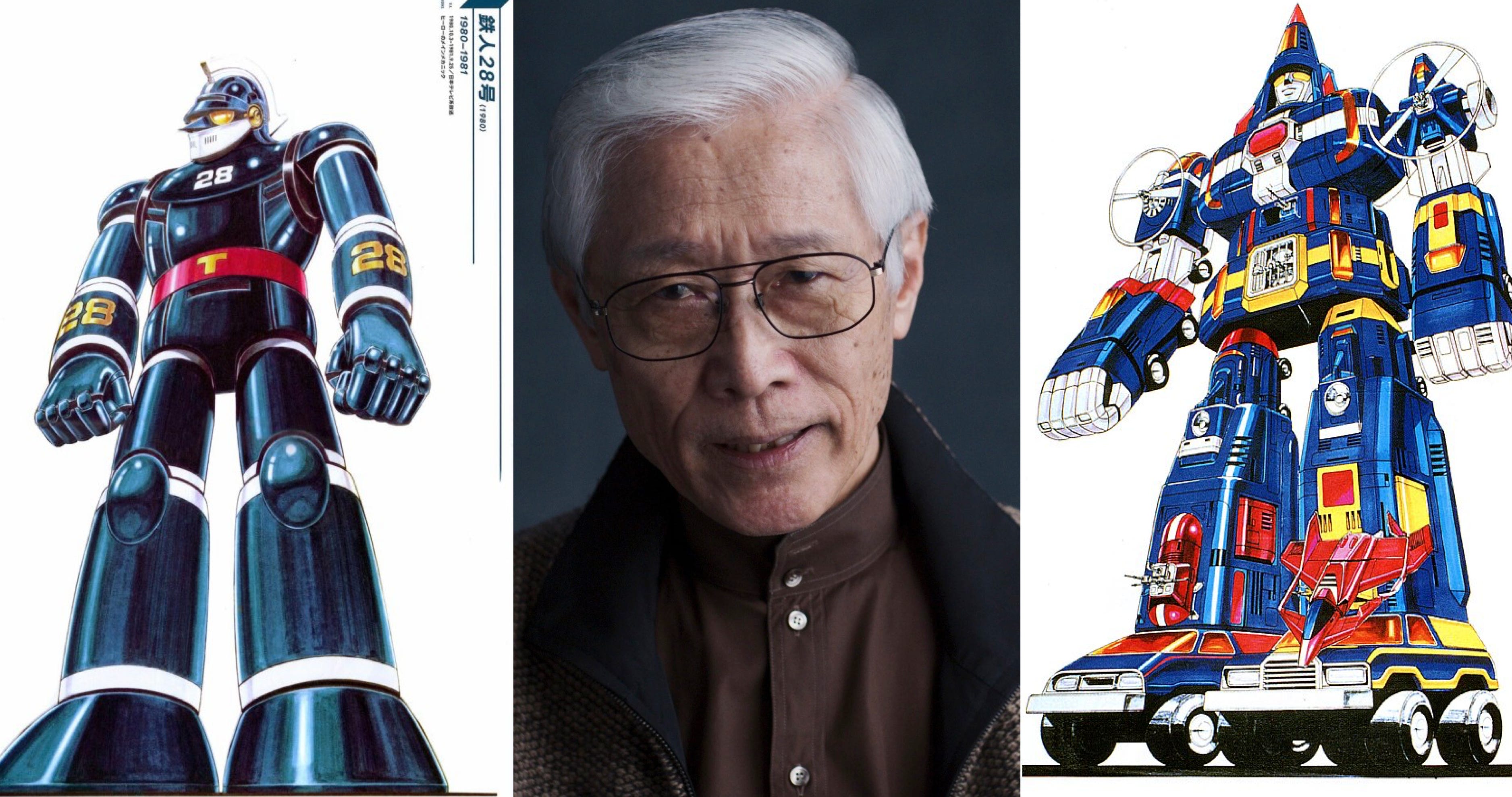
One of the hazards of my hobby-turned-vocation of tracking down the creators of Japanese fantasies is that many of them are elderly, and we soon have to say farewell. It’s a jarring thing, finally meeting someone who had an indirect hand in making you you, only to lose them all too shortly thereafter. So it went with Nintendo Entertainment System creator Masayuki Uemura, whom I had the pleasure of meeting and then the bittersweet honor of eulogizing in 2021, and karaoke pioneer Shigeichi Negishi, for whom I did the same in 2026. To this roster we must add Katsushi Murakami, who passed away last week at the age of eighty three.
I wouldn’t be surprised if you didn’t know his name. Murakami wasn’t a celebrity creator. He wasn’t a showrunner or storyteller. He was the man showrunners and storytellers turned to when they needed something to sell their shows and stories to sponsors. In the Seventies and Eighties, this something was inevitably a giant robot, for that was the most popular genre of toy for boys. And Murakami was an absolute whiz at designing them. Perhaps the most famous of his creations were the Voltrons, of both lion and vehicle configurations. Neither of the shows upon which Voltron was based were particularly popular in their home country, but their surprise success in the U.S. made Voltron a synonym for “combining robots” in English and paved the way for the even bigger craze of Power Rangers a few years later. Murakami designed most of the robots in that series, too.
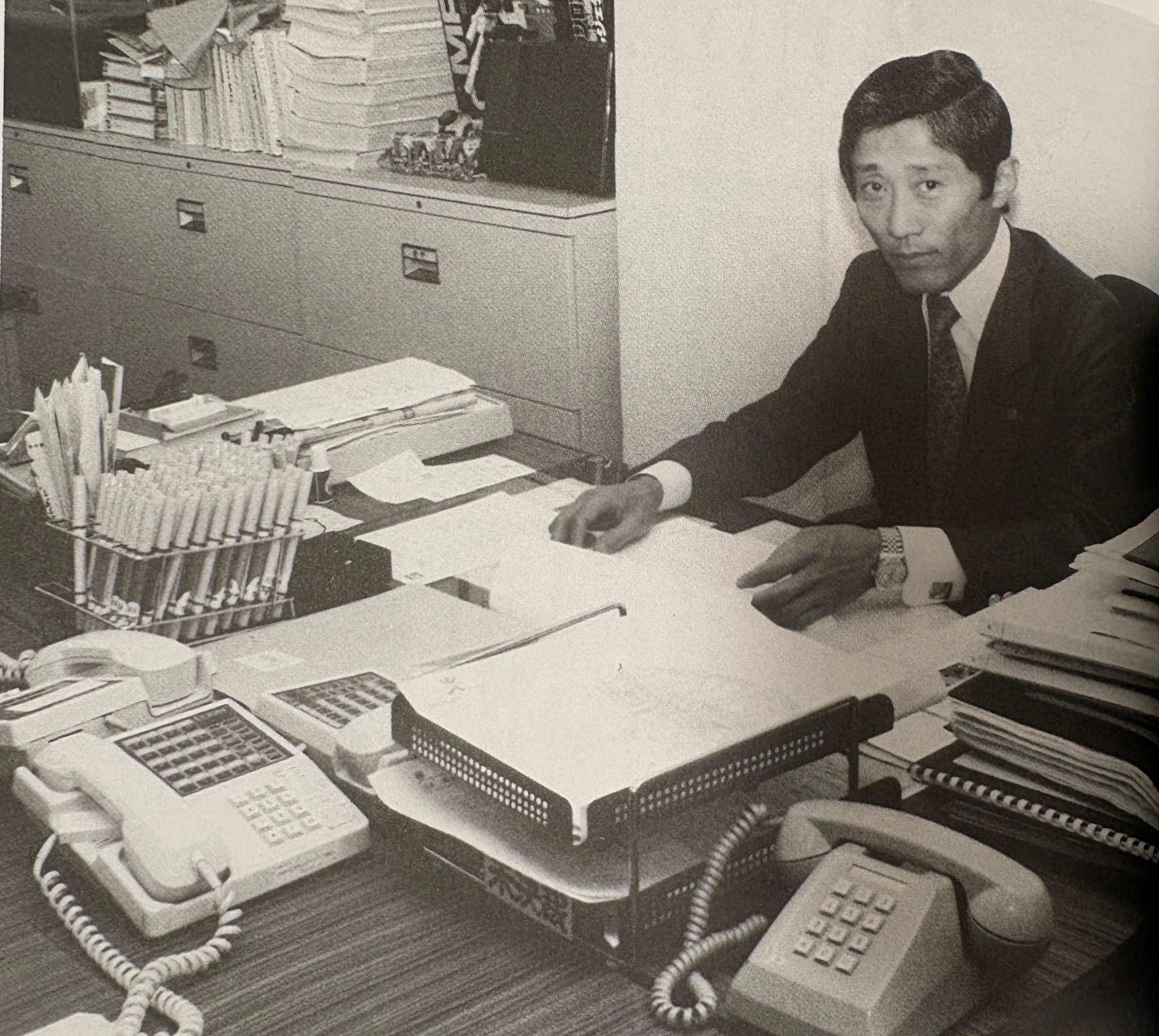
He was one of the first creators I made contact with after moving to Japan in the Aughts. For him, it was a Tuesday; for me it was a meeting decades in the making. When I was a child, my first taste of connoisseurship, my first understandings of taste, came through exposure to his work. I grew up at a moment when robots, and more specifically robot toys, were sweeping the American marketplace. The Transformers, which first aired in 1984, led the pack. But it was another, more obscure series that seized my imagination. It was called Godaikin, imported by the American wing of a Japanese company called Bandai. Murakami designed nearly all of them, and they spoke to me in ways that more mass-market merch did not.
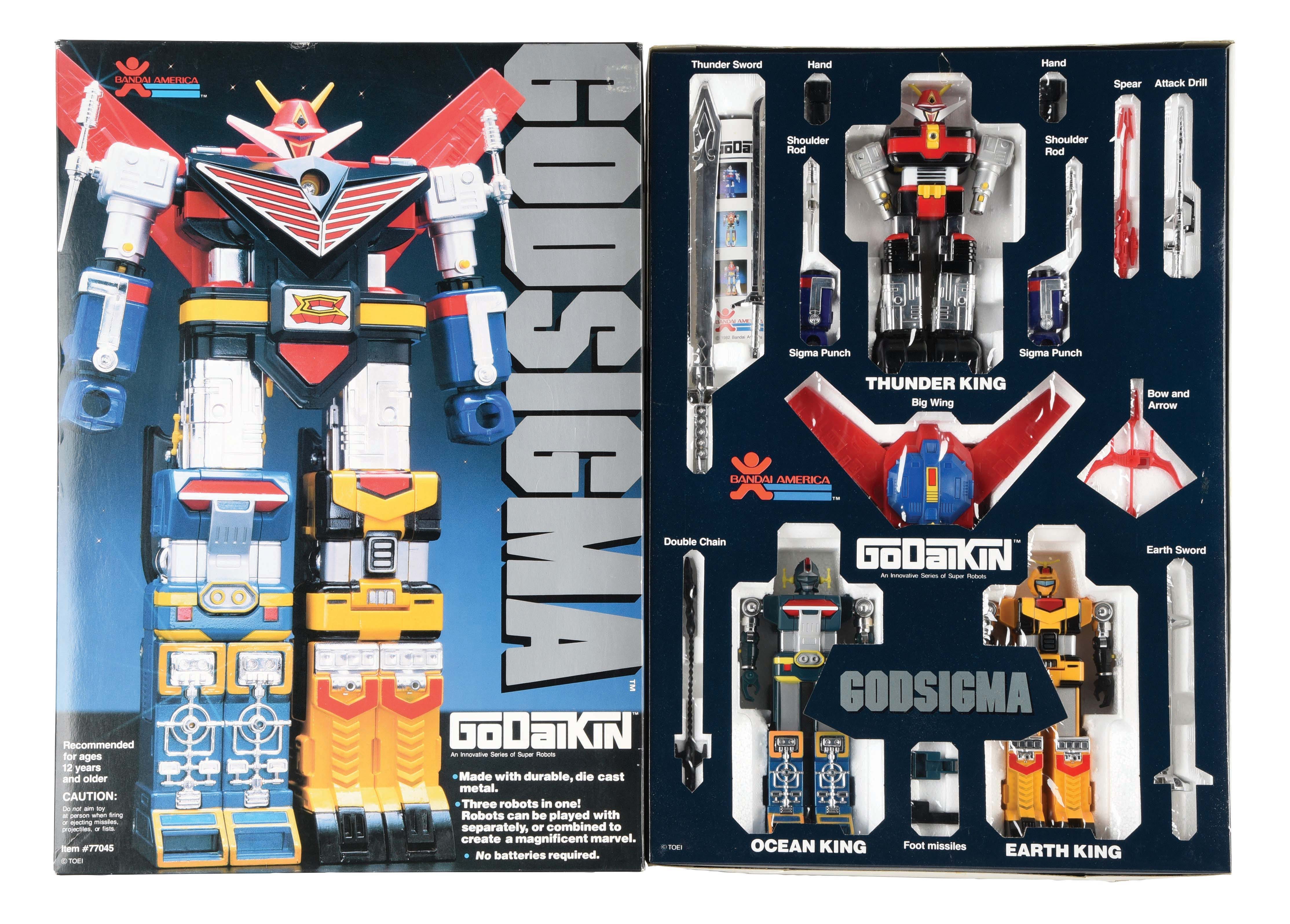
The Godaikin had no comic-book or cartoon tie-ins. They existed simply as toys, sold purely on their own aesthetic merits, with little in the way of localization or explanation. (I still remember trying to puzzle out the pronunciation of “Combattra” after receiving one as a Christmas present in 1983.) Over the years I would piece together that each and every one of these characters originated in a toy line that was called called Chogokin1 in Japan, a hero from a show that wasn’t, for a variety of reasons, being aired in America. This realization drove me absolutely wild. There was this incredible robot-centric fantasyscape, tantalizingly out of reach on the opposite side of the planet, and here I was stuck in America with the goddamn Go-Bots! (Murakami designed many of those, too.)
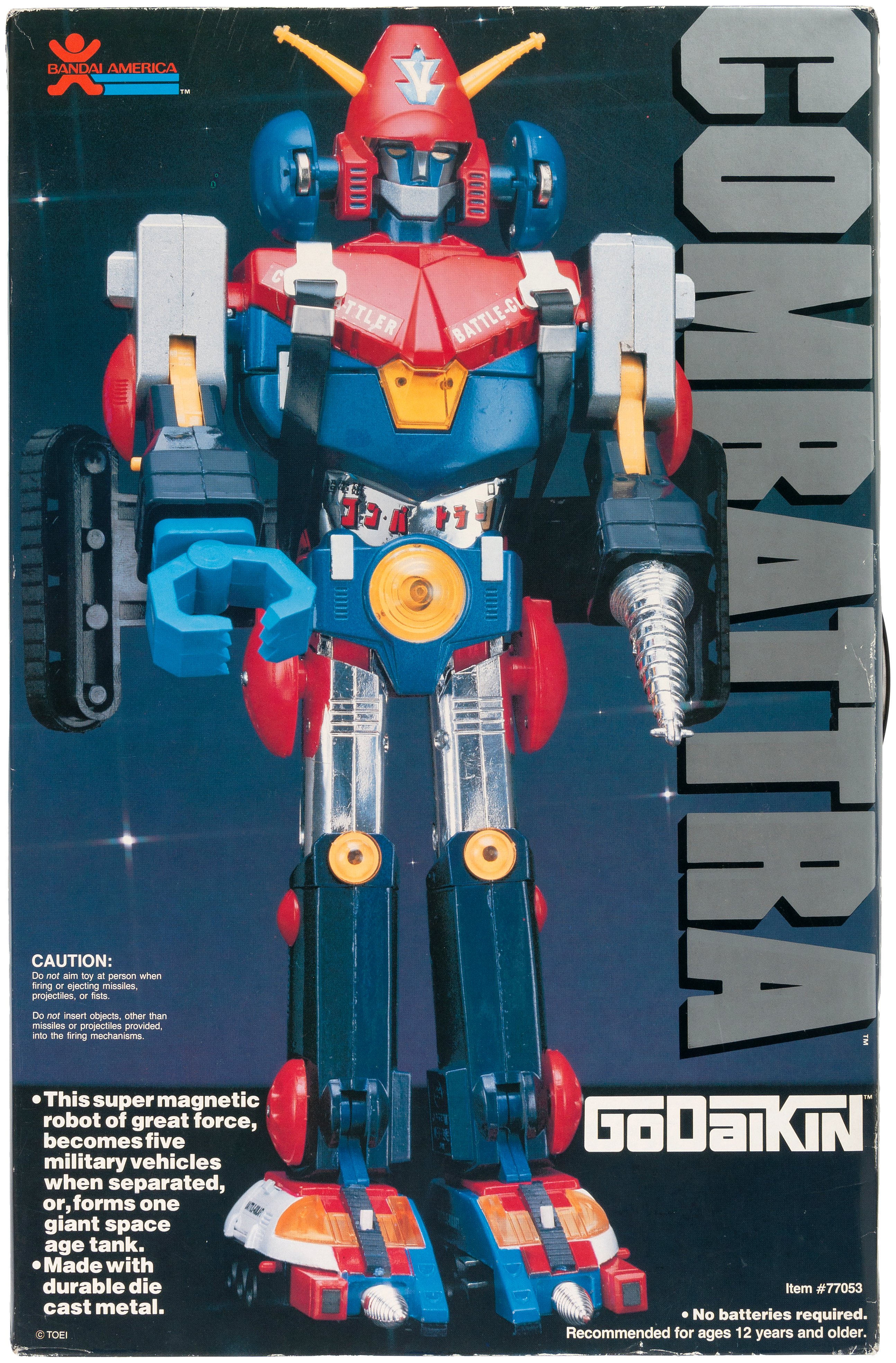
I am not in the slightest bit embarrassed to tell you that one of my primary motivations for learning Japanese in high school was the promise of learning the exotic tongue of the Godaikin Motherland. Over the years I grew into an adult who kept thinking about Godaikins long after any sane, healthy adult should be thinking about them. But as luck would have it, I had also made friends with other grown-ups who also hadn’t stopped thinking about Godaikins either. One of them was named Patrick Macias.
In those years, the two of us often found ourselves taking dinner meetings with Bandai employees, and we had regularly told them, often after several mega-sized mugs of Kirin Ichiban, there that we wanted to meet Murakami. Why? They’d ask in surprise. Because, we said, pausing theatrically to take heroic synchronized slurps from our steins, he designed the Godaikins (and Shogun Warriors, and Go-Bots and Power Ranger robots and at least one Gundam) that had drawn us to Japan like Mothras (which he didn’t design) to the Flaming Sword of Future Robo Daltanias (which he did.)
Patrick and I had no idea what to expect on that night — it must have been 2007— as we sat at the designated izakaya in Akihabara, waiting for Murakami to arrive. He turned out to be a dapper older gent in his mid sixties, silver-haired, dressed in a suit and tie, a little confused by the attention these two scruffy young foreigners were lavishing on him. I still recall the first question he asked us: Have you seen the movie Shane? It was one of his favorites, it turned out. We spoke more of American aesthetics than we did Japanese that night. He told us he originally dreamed of being a car designer, and something clicked into place. If you squinted just right, you might see Ford Futuras and ’57 Chevies and classic Cadillacs and Corvettes reflected in the chrome and curves, the fins and fangs and fairings of the Godaikins. It was a lesson to me that ones’ passions don’t always lead down the path one first imagines, and that that isn’t necessarily a bad thing.
Anime and manga rule the roost today, cornerstones of Japan’s soft power abroad. But Murakami lived and worked in an era when toys came first. You couldn’t get a kid’s show on the air without a sponsor, and the vast majority of sponsors were toy companies eager to use the airwaves to sell their products to children. This made for some strange bedfellows. When Toei licensed the rights to Marvel Comics’ Spider-Man in 1978, they were only able to get their live-action adaptation on to television by bringing Bandai on board, who insisted that your friendly neighborhood Spider-Man ride in a giant robot so that they might sell toys of it to viewers. It was named, inexplicably, Leopardon2, and was designed by – are you sitting down? – Katsushi Murakami. (The Spider-Man-drives-a-robot3 scheme proved so successful that Toei began adding giant robots to all of their live-action shows, which is why the Power Rangers have their Megazords.)
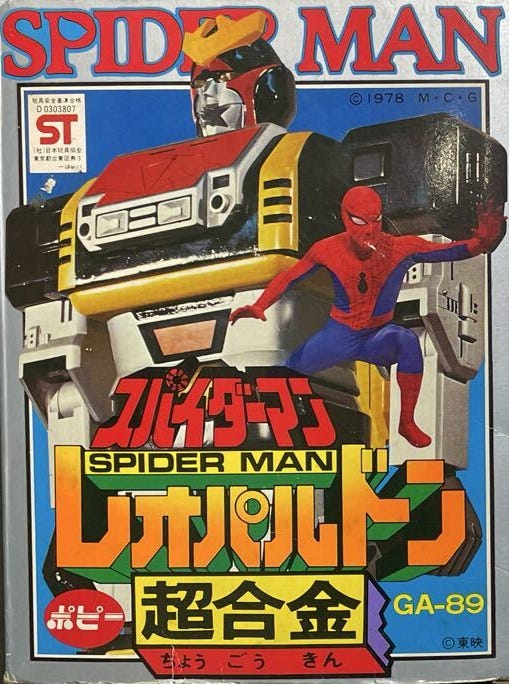
Murakami’s design sensibilities affected me far more than any of the actual shows, for the simple reason that as an American in the Eighties you couldn’t see any of them, Voltron(s) excepted. Today, that paradigm has totally reversed. Thanks to streaming media platforms, Japanese cartoons and live-action shows are as easy to watch in Topeka as they are Tokyo, and the franchises themselves represent the crown jewels of Japan’s fantasy-industrial complex. And in keeping from the analog-to-online switch the world has gone through, kids don’t seem to want physical toys anymore; they prefer data, whether in the form of games or downloadable stamps or cards.
Nevertheless, anime’s foundations are built upon the shoulders of the giant robots and spaceships and vehicles that first took flight from Japanese screens in the Twentieth century, soaring onto store shelves and into playrooms around the planet. Those toys didn’t just sell in huge numbers; they transformed the fantasy lives of kids like me, as we consumed them, making all of our dreams a little more Japanese in the process. There’s a little of Katsushi Murakami in everyone who fell in love with Japan because of its robots. He will be missed.
Chogokin means “super alloy” in Japanese, which makes a lot of sense for a series of toy robots. So what does Godaikin mean? Nobody knows. I had been asking Bandai employees for years before I put the question to Murakami himself. He didn’t know either. American fan theories abound — one goes that it was coined as a portmanteau of “kin of the gods” — but none have so far proved compelling. As for me, asking Murakami felt a little like asking the proverbial sage on the mountaintop and I’m comfortable leaving this a mystery for the ages.
In a 2006 interview, Murakami said the name was inspired by the West German army’s Leopard tank. Perhaps a Porsche Spyder would have been a little too on the nose.
I’m just going to state for the record that Toei’s Spider-Man is better than anything in the Marvel Cinematic Universe. Don’t believe me? Feast your eyes. (That sports car — of course, Spider-, Murakami designed Spider-man’s sports car, too.)
Amazing article, thanks for this. I'm sorry for his passing but glad to have learned about him. I draw a straight line from buying the imported Bandai God Marz at Forbidden Planet in Manhattan in 1984 to now having two half-Japanese children. :) (I'm not sure the Japanese would call that a victory of soft power but okay.)
“…and here I was stuck in America with the goddamn Go-Bots!” is one of my new favorite sentences. I do have a better appreciation for them now, but in my childhood they only existed to confuse anyone trying to buy me a Transformer. Anyway, a big thank you for highlighting the life and work of Murakami-san.