


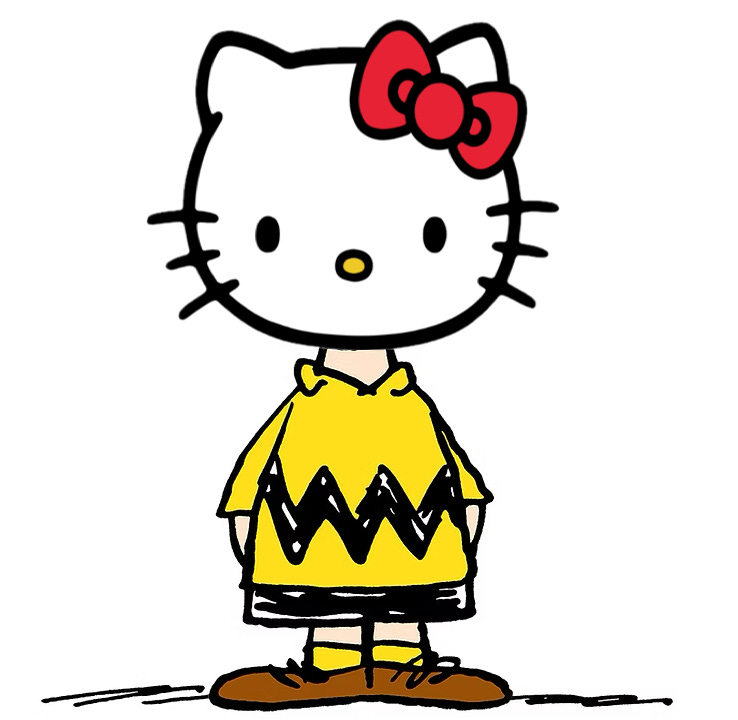
It wasn’t so long ago that purchases of American institutions by Japanese companies sparked outrage in the United States. When Mitsubishi bought the Rockefeller Center in 1989, a local auto dealership ran a TV spot that invited Americans to “imagine a few years from now. It’s December, and the whole family’s going to see the big Christmas tree at Hirohito Center… Enough already.” Sony’s purchase of Columbia Pictures that same year caused such unease that chairman Akio Morita felt the need to declare “this is not a Japanese invasion.” A Newsweek poll of the era revealed that 54% of Americans saw Japan as a bigger threat to America than the Soviet Union. Many exploited this fear of Japan for their own ends. Domestic manufacturers blamed their slumping sales on Japan’s unfair trade practices. Grandstanding politicians theatrically smashed Japanese products in publicity stunts. Predictably, Donald Trump’s first public foray into politics was a jeremiad against Japan in a 1989 appearance on the Oprah Winfrey Show.
Contrast this to yesterday, when Sony announced that it had paid nearly half a billion dollars for another American icon: Peanuts Holding LLC, the company that administers the rights to the Peanuts franchise. Talk about A Charlie Brown Christmas for shareholders! The reaction to this Japanese acquisition of a cultural institution? Crickets. This speaks to how dramatically the relationship between the US and Japan has changed. It also speaks to how dramatically Peanuts changed, how Peanuts changed Japan, and how that in turn changed all of us. But perhaps most of all, it illustrates (pun intended) how stories need products, and products need stories.
There are countless stories out there, and countless products. But crossing these streams — giving stories products in the form of merchandise, or products stories to make them more than just commodities, can supercharge both. It can create international empires. Peanuts is a perfect case in point.
When Charles Shultz’ Peanuts debuted in October of 1950, it was utterly unlike any cartoon Americans had seen in the funny pages. The very first strip’s punchline involved an adorable tyke declaring his hatred for Charlie Brown. Li’l Abner creator Al Capp described the cast as “good mean little bastards eager to hurt each other.” Matt Groening of The Simpsons fame recalled being “excited by the casual cruelty and offhand humiliations at the heart of the strip.” To Garry Trudeau of Doonesbury, it “vibrated with fifties alienation.”
A hint of darkness made Peanuts stick out in a crowded comics page. But it’s hard to square these comments with the Happiness Is a Warm Puppy-era Peanuts I remember from my childhood. By that time Schultz had sanded the rough edges off those “little bastards,” distilling them into cute and lovable archetypes. More to the point, he de-centered the kids to focus on Snoopy, who had morphed from his origins as a four-legged canine into a bipedal, anthropomorphic creature with a bulbous head and a penchant for tap-dancing and flying biplanes.
The vibe shift seems to date to 1966, when the animated It’s the Great Pumpkin, Charlie Brown devoted roughly a quarter of its screen time to Snoopy’s solo flights of fancy. Schultz was already lauded for his short-form social satire: his characters had graced the cover of Time the year before. But he seems to have grasped that the way to riches would be only found by looking at the brighter side of life.
This new Peanuts, less mean, less casually cruel, less alienated, was arguably also less interesting. But there was no question that it was way, way more marketable. You might have identified with one or another of the human characters, with their all too human foibles, but anthropomorphic Snoopy was someone anyone and everyone could inhabit. Kids in particular. You didn’t even have to be American to get him.
This later, kinder, gentler incarnation of Peanuts, and Snoopy in particular, would charm Japanese audiences, thanks to the efforts of a serial entrepreneur named Shintaro Tsuji. He was a would-be poet turned wartime chemist, then a postwar black-market bootlegger of moonshine, and an inveterate hatcher of business schemes ranging from silks to produce to kitchenware. You are undoubtedly familiar with the most successful of his ventures. It is called Sanrio — the home of Hello Kitty.
Tsuji, long interested in American trends, played a key role in importing many of them to Japan. He forged a relationship with Hallmark to translate their greeting cards, and negotiated with Mattel for the rights to Barbie. He acquired the license to Peanuts in 1968, when his company, then known as the Yamanashi Silk Center, was at a low. Snoopy-branded merchandise proved so popular that it put his struggling company back in the black within a year. Snoopy wasn’t the first cute animal to hit big in Japan; Tsuji himself had scored a big hit in the mid-sixties with merchandise featuring Mii-tan, a cute cat designed by the artist Ado Mizumori. But Snoopy’s runaway success seems to have sparked an epiphany in Tsuji.
As he later put it, Japan was “a world in which ‘making money’ meant ‘making things.’ I desperately wanted to leapfrog the ‘things’—the ‘hardware’—and make a business out of the intellectual property—the ‘software.’ I suspect everyone around me thought I was nuts.”
He was nuts. Merchandising characters from hit stories was common sense, then as now. Many Japanese companies did that sort of thing. Creating hit characters without stories was fiendishly difficult, bordering on impossible. Stories breathe life into characters, bestowing them with an authenticity that standalone designs simply do not possess (or need to earn in other ways). Yet Tsuji would not be deterred. In 1971, he launched an in-house art department, staffing it with young women straight out of art school. In the wake of Peanuts’ continuing success, he gave the team a singular directive: “Draw cats and bears. If a dog hit this big, one of those two is sure to follow.”
Two years later, he renamed the Yamanashi Silk Center “Sanrio.” (There’s a whole story about how that came to be, which you can read in my book, if you’re so inclined.) The year after that, in 1974, one of Sanrio’s designers struck gold, in the form of an anthropomorphic cat with a bulbous head and a penchant for hugging: Hello Kitty. Soon, Kitty products were a full-blown fiiba (fever) in Japan. And this time, Tsuji didn’t have to split the proceeds with anyone, because Sanrio owned the character outright. Schultz needed decades of narrative to make stars of Peanuts’ menagerie of characters. Tsuji upended this process by making characters stars without any story at all.
Sanrio famously insists that Hello Kitty isn’t really a cat; she’s a little girl who happens to look like a cat. I take no particular stance on this globally divisive issue. But I think you can make the case that she wouldn’t exist at all, if it hadn’t been for the trail Schultz blazed with Peanuts, shifting away from social satire to make an anthropomorphic dog the star of the show. Tsuji’s genius was realizing that you could make a star without a show — provided you had the ability to print it on countless school supplies, kitchenware, and accessories. That was the trick up his sleeve. The medium is the message, as they say. In essence, Kitty products, ubiquitous to the point of absurdity, became her story.
Interestingly, while Sanrio has expanded Hello Kitty’s biography over the years, they never really succeeded at giving her a true narrative. (And yes, they’ve tried; perhaps Kitty with a mouth is just a bridge too far for people.) Maybe it’s better to say that Tsuji’s storytelling medium of choice wasn’t the newspaper page or television screen; it was Sanrio itself. Hello Kitty is a blank slate that lets anyone and everyone identify with her. Her lack of story is the story.
In later years Tsuji, now unimaginably successful and wealthy, would claim that it was he who gave Schultz the idea to make Snoopy the star of Peanuts in the first place. There’s no evidence this was actually the case, but I don’t hold it against him. You need to be something of a fabulist to launch a fantasy empire in the first place.
Which brings us back to Sony’s acquisition of the Peanuts. The specific entities involved are Sony Pictures Entertainment and Sony Music Entertainment, which are sort of like products in search of stories in their own right. Peanuts gives those stories to them.
We do not know what this portends for Sanrio, who has so carefully tended the franchise in Japan all of these decades. (Personally, I think Sony would be nuts to throw all that expertise out the window, but who knows.) The irony is that most of us consume Peanuts in a very Sanrio-esque way these days, which is to say bereft of narrative. I can’t recall the last time I read a Peanuts comic, but I see the characters everywhere on clothing and all sorts of products. Perhaps that’s exactly why Americans are greeting Sony’s acquisition of Peanuts with a collective shrug: it has already been Sanrio-ized. As have all of us, in a sense. So what better steward of America’s cutest cast of characters than the Japanese?
great article, "Sanrio-ized" is so adequate !
The 90’s in america were a peak fever of characters without narrative (without meaning?), mostly in the form of t-shirts. Big Dog. Life Is Good. No Fear. Stussy.
The next step in the evolution of meaninglessness was the arrival of brands like Hilfiger where the character was reduced to a logo, a personality taken apart and broken down into shapes and colors in a way that echoed abstract expressionism but through the lens of consumerism.