



The Japanese papers are covering the staggering losses of the Cool Japan Fund, a governmental initiative launched by Prime Minister Shinzo Abe in 2013 to spur investment in the global promotion of Japanese cultural products.
A decade-plus later, Japanese content is more popular abroad than ever before. But few believe the Cool Japan Fund’s efforts have had anything to do with that. Questions about scope and effectiveness dogged the Fund since the very start. Now the results are clear: it lost a total of 54 billion yen since its inception. That’s the equivalent of almost $334 million USD of taxpayer dollars flushed down the Washlet. The Takaichi administration has said they are strongly considering shutting the whole thing down.
On the one hand, to put this in perspective, $330 odd million isn’t much from a national budget standpoint. It’s equivalent to three F-35 fighters. It’s the original projected cost of the White House ballroom, before said cost doubled. It’s half the amount the Dodgers are paying for Shohei Ohtani’s ten-year contract. But still, not a good look. Japan is raking in close to five trillion yen a year ($30 billion USD) in content exports, and these guys still managed to go 54 billion yen into the red? Brutal stuff.
An Asahi Shimbun investigation attributes the losses to a toxic mix of over-extension and under-talented staff. Only 27% of the fund was invested in what the world associates with “cool” Japanese content, which is to say the media industry. The bulk of the Fund’s money went into a motley mix of lifestyle and food ventures including Indian micro-transaction platforms and Vietnamese refrigerated warehouses.
The report highlights a specific investment of 14 billion yen — $87 million USD! — that the Fund made in a company called Spiber, which manufactures “artificial structural proteins” out of spider silk. Pretty cool, but not really Japan Cool. Could have been, had the company used their powers for good and created a real-life version of Toei’s 1978 Japanese Spider-Man series. Instead they released a line of really expensive outerwear that didn’t sell very well. “The fund lacked the talent to discern which projects to select,” the Asahi quotes an unnamed government officials as saying. Ouch.1
My ongoing hunger for a pair of Spider-Man style “web shooters” aside, I’m going to just come out and say it: any government-led initiative that is designed to identify and promote what is cool is doomed to fail. Not because Japan isn’t cool, or because its content isn’t cool. But because the bureaucracy is inherently uncool.2 Identifying what’s cool requires taste, and bureaucracies lack this by design.3 It is the job of bureaucrats to serve everyone and preserve the status quo. Cool is the opposite: it’s all about subverting whatever the status quo is.4
Up until about the turn of the Millennium, society saw manga and anime and video games as anything but cool. They were nerd subculture at best. Interest grew slowly but steadily over the Eighties and Nineties. The arrival of the Nintendo Entertainment System; cable television broadcasts of increasingly edgier anime series; and then the Pokémon craze of the turn of the Millennium. And the bigger it got, the more nervous it made the authorities. America’s surgeon general railed against arcade games for addicting American youth. Educators blamed Power Rangers for playground violence. Senators launched congressional inquiries into home console games. Time called Pokémon “a pestilential Ponzi scheme.”5
Another wrinkle is that until Pokémon aired in the US in late 1998, the sorts of Japanese shows that hit in America tended to be stuff that was considered fringe in Japan. Akira, Ghost in the Shell, Gundam Wing, Cowboy Bebop — all of them amazing artistically, all of them cult hits at best in their home country. In the mix were a series of even more fringe-y, edgy, direct-to-video features filled with weird sex, like Ninja Scroll and Legend of the Overfiend. As a result, for a long time “anime” was practically synonymous with “porn” in the States. “These days,” wrote The New York Times in 1998, anime refers strictly to ‘adult’ Japanese animation, aimed primarily at young men.” Strictly!
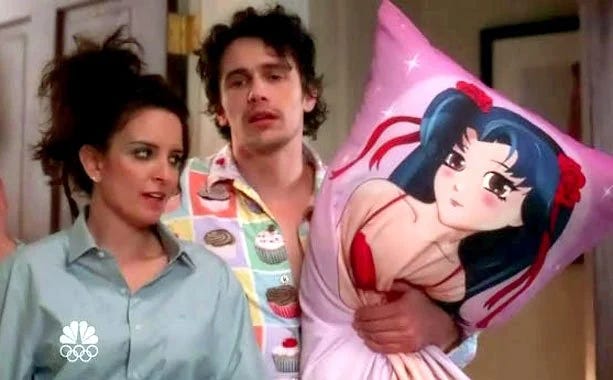
Inside and outside of Japan, grown-ups despised Japanese pop culture. And that’s exactly what made it so cool. Fandoms emerged because fans believed that society at large looked down on things that they valued. Being an otaku super-nerd was a badge of honor, your ID in a secret club of like-minded sorts with tastes far more refined than the average schmoe, who dismissed it as “strictly” porn. Their loss!
This is the central conundrum of any kind of governmental campaign to identify and promote what’s cool. Cool is at odds with official (or common-sense) narratives about what constitutes “good taste.” It was true about Elvis gyrating on TV in the Fifities. It was true about the anime-tentacles of La Blue Girl in the Nineties.
Back then, the idea of a government actively supporting cartoons and comics and video games would have seemed twisted and dystopian both to critics and fans alike. But times change — over the course of thirty-odd years, the kids raised on all of this stigmatized content grew up to become voters. Hence Prime Ministers dressed like Super Mario and Dragon Ball Z characters.
The Cool Japan campaign pretends that society never stigmatized pop culture, that all of this stuff is and always was perfectly acceptable, rather than the sort of thing that was consumed by the fringes of society, the outcasts and nerds and all the rest. It’s easy to go along with this, because the otaku won this societal battle and it’s “hip to be square” now. It’s a good thing creators and consumers of pop content aren’t stigmatized anymore. It’s a good thing the government is trying to support these industries. Yet obviously something is missing. Otherwise, the fate of the Cool Japan Fund wouldn’t be hanging by a thread of synthetic spider-silk.
So here’s my modest proposal. Launch an Uncool Japan Fund. I am not being facetious. It would be a recognition, even a celebration, that most of the influential pop-culture to come out of Japan in the 20th century wasn’t seen as cool by authority figures or society at large. It was the stuff on the fringes. Sometimes it really was edgy. Just as often, it wasn’t: the simple idea of grown-ups playing games, watching cartoons and reading comic books made the “normies” squirm. We need to reclaim this heritage.
I wouldn’t staff the Uncool Japan Fund staff with executives slumming it as a favor to pals in high places. I’d pick weirdos with taste. In other words, nerds. I’d let them run wild, choosing what the fund invests in based not so much on potential return but potential awesomeness. The sorts of things created by iconoclasts and outsiders. The stuff that challenges and provokes and even occasionally upsets. In other words, the stuff that’s really cool.
Of course, it’ll never happen. And the Uncool Japan Fund would probably lose just as much money as the Cool Japan Fund did. But it’d be a hell of a lot more fun to watch. And isn’t that what pop culture is supposed to be about?
In the Fund’s defense — I can’t believe I’m saying this — another probable reason is that actual “cool-finders” in the investment industry had already identified and invested in everything worth investing in. As a result, the Cool Japan Fund bureaucrats were left scrambling for whatever peripherally-cool deals they could find.
It is for this very reason that the Cool Japan Fund was helmed not by a bureaucrat, but business executives: the current CEO is from the investment banking world, but his predecessors included the CEO of a department store and the head of Sony Music Entertainment. Unfortunately, for them, however, lawmakers capped their compensation to no more than what a high-ranking bureaucrat can make. That’s a little over seven million yen a year — the equivalent of around $45,000 USD. It is hard to attract top talent with a salary that is, according to Glassdoor, less than half of what a Tokyo-based 7-11 manager can make.
Please don’t mistake this for slagging off on bureaucrats. They do the stuff that keeps our governments functional. I was one myself. I spent five years in the late 90s in a featureless cubicle in the misleadingly named Crystal City, Virginia, working for the US Patent and Trademark Office, hammering out translations for an equally uncool but necessary group of folks known as patent attorneys. There were some fine folks among them. However none of us, whom I like to fondly re-imagine decked out in coke-bottle glasses, graphing calculators, and pocket protectors brimming with pens, even though we weren’t, would have been among my first choice for trend-trailblazers.
And that status quo tends to be conservative, fiscally and socially. Yet Japan’s popular culture is inherently progressive. It celebrates individuality and weirdness and speaks truth to power. This often puts a government that is supposedly so invested in promoting content at odds with the creators. Drector Hirokazu Kore-Eda’s politics so infuriated Shinzo Abe that the Prime Minister pointedly refused to send congratulations after the director won the Palm d’Or. Hayao Miyazaki is famed for tweaking the authorities, most famously when he decked Studio Ghibli out in anti-nuclear slogans after the meltdowns of 2011. Haruki Murakami is an outspoken critic of the Japanese government. The list goes on.
Pop content was just as equally stigmatized in Japan. The authorities, both at local and national levels, did everything they could to keep kids out of video game arcades. The national broadcaster NHK added “otaku,” slang for an obsessed fan, to a list of forbidden words. As recently as 2011, we were treated to the sight of a Tokyo governor slamming manga on a tabletop and declaring them “for abnormal people, for perverts.”
Wait… Spiber! That’s down the road from us, I had (keyword) tons of friends who worked there, they went into private liquidation!!
$330 million is roughly equivalent to one-quarter of Ubisoft's recent losses.