


Art Basel asked me to write an essay on the provocative topic of whether Japanese comics and graphic novels, a.k.a. manga, could be considered art. The reason for the request was simple. In recent years, an increasing number of foreign galleries, auction houses, and museums have begun collecting and curating exhibitions of manga art. Most recently the M+ in Hong Kong, which opened its show last week. (I wrote an essay about Osamu Tezuka for the catalog – check it out if you happen to visit.)
The essay, which you can read on Art Basel’s website, dodges the question by focusing on how Japan viewed illustrated entertainment for much of the postwar era, which is to say “as a social scourge.” Only over the last two decades or so has manga and anime emerged from the subcultural shadows to become “Japan’s global champion,” to paraphrase a headline from that bastion of manga criticism, The Wall Street Journal.
Truth is, the fact that an organization like Art Basel asked me the question in the first place means it isn’t really a question at all. The gatekeepers of the art world, the critics, the galleries, the collectors, the curators, the fairs, and the museums are all paying attention to Japanese manga. That means it’s art – defined as the commodity that these gatekeepers specialize in handling.
The bigger and more interesting question, and one I wasn’t asked my opinion about, is whether getting treated as art is a good thing.
If you’re a fan of a certain age, who grew up (or was, gasp, already an adult) when polite society frowned upon the reading of comic books and such, seeing your favorites hanging on museum walls might seem a wonderful personal validation. If you’re a publisher, you might view the sudden attention as a juicy marketing opportunity. But what if you’re an actual creator, a manga writer or artist? The benefits are often a lot murkier. Sometimes, the attention can be downright costly – but I’m getting ahead of myself.
The reason the art and business worlds are suddenly interested in manga and anime is because they are globally successful creative media that generate enormous popular interest and enormous sums of money. But it’s important to remember that the biggest titles that get the most attention, like Demon Slayer or One Piece or Detective Conan, are outliers. Most manga artists only ever dream of achieving a fraction of this kind of success. For a great many, their career consists of long hours of toil on tight deadlines for meager per-page rates, praying that their series hangs on long enough to get published in paperback form, which is the only way they might finally earn some royalties. (I described this system at length in a feature for The New Yorker last year, and it’s a rough road even for those at the top of the game.)
Here’s where things get complicated. The fairs and galleries and museums are interested in displaying originals, the physical copies of art that the artists drew by hand for reproduction on the printed page. Yet most manga isn’t produced in this way anymore. Today only a very few artists continue to work with pen and paper; the vast majority long since switched over to digital tools, which makes both collaboration with assistants and delivery of the finished pages easier. This essentially means — paging Walter Benjamin — that there’s no original to begin with. As a result, the gatekeepers of the art world tend to focus on older titles and creators, classic works rather than those currently in the public eye, ones more likely to have been drawn with pen and ink on paper rather than pixels on tablets.
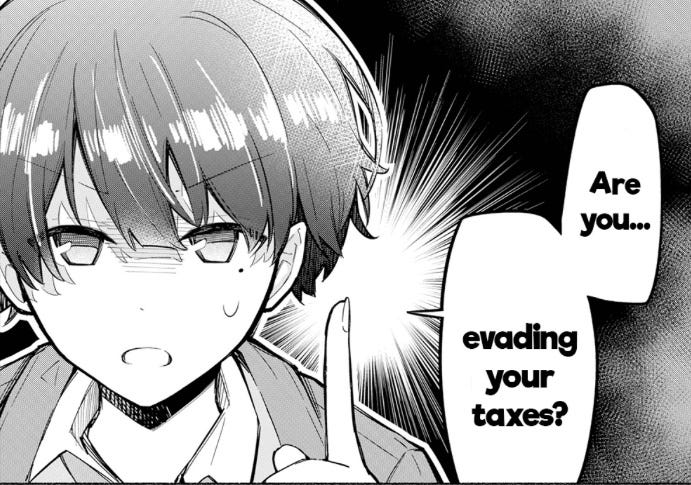
There’s nothing inherently wrong with this. It makes sense to celebrate the classics. And looking at paper originals is a lot of fun. But it also creates problems for the artists, problems of which foreign museum-goers and even curators are blissfully unaware. I’m speaking of taxes. And more specifically, inheritance taxes.
Inheritance taxes are notoriously high in Japan, with low exemptions that place potentially huge burdens on heirs. (This is, incidentally, one of the reasons that there are so many abandoned homes in Japanese cities – rather than having to deal with the huge costs associated with settling an estate, many simply ignore the properties altogether.)
What does this have to do with manga? Originally, manga originals were viewed as essentially worthless. For a very long time the Ministry of Finance, which designs tax policy, treated them as a kind of industrial waste, byproducts of the printing and publishing process. But this started to change in the 2010s. As the government began to pay more attention to pop culture from economic and diplomatic standpoints, the taxman began re-evaluating the values of pop cultural products. Chief among them were manga originals, which some sharp-eyed bureaucrat must have noticed were beginning to sell for large sums of money in collectors’ markets.
By 2017, the Ministry of Finance had changed its tune. The value of manga originals were now to be “based on actual sales examples, and the opinions of those involved.” This last bit translating into “whatever we say.” Now, I’d guess that most transactions of original comic art in Japan aren’t between the creator and the buyer, but rather some third party who acquired the art at some point and has decided to sell or auction it. Presumably sales and capital gains taxes are being charged to those who sell and purchase them. So what’s the big deal for creators?
The big deal is that now the art that they made, and that they’ve been sitting on for decades thinking worthless, can now be valued at some arbitrary number by tax officials, whether the creator has ever profited from one of these sales or not. And that becomes a problem when valuing an estate for inheritance purposes. It might not surprise you to hear that a lot of manga artists aren’t great with money. The fear of saddling their children with some unforgiving tax-debt over a stack of paper has led some to try and rid themselves of their legacies altogether. Some are able to donate their originals to institutions. But there are also rumors of creators physically destroying their work altogether.
Writing on Twitter when it was still known as such, the manga artist turned parliamentarian Ken Akamatsu called for manga art to be exempted from inheritance taxes, but to date I’m not aware of any actual action being taken on this front. And the attention from foreign galleries and museums is only going to intensify the pressure on legacy creators who are in possession of large amounts of original art.
So sell it! And pay the capital gains! You might say. The problem with that is that not every original, not even from a hit series, has the same worth to collectors. And you can never predict what one might (or might not) sell for at auction, or even in a one-on-one transaction. Some of the pages, perhaps expository ones without a lot of action, might not have much if any value at all. But the taxman doesn’t care — they saw some art going for a small fortune at Mandarake or Sotheby’s, so it all must be worth a small fortune, right?
Let me be clear that I do not think any of the gatekeepers I’ve mentioned are complicit in this issue, nor do I think they are treating those they choose to showcase unfairly. What, do we expect George Lucas, who devoted an entire room to manga at his Museum of Narrative Art, to lobby the Japanese government to change their tax laws?
But there’s no question that move to make manga Art with a capital A has repercussions. Some are good — it’s nice to be recognized. It’s certainly preferable to seeing your work tossed on a bonfire, which, as I mentioned in the Art Basel piece, happened in the Fifties. But there are downsides to all of the attention, too. And unfortunately they fall squarely on the shoulders of those who made all of this stuff in the first place.